- My Library Account
- Collections

Collections
The Library provides access to books, electronic resources, archives, special collections, and more to support your learning and research.
- Research

Research
The Library is committed to supporting your research needs with expert guidance and resources.
- Studying

Studying
The Library has all the resources and supports you need to be successful in your studies at undergraduate and postgraduate level. Whether you're just starting your studies or working on your final project, we're here to help.
- Teaching

Teaching
We are here to help lecturers and academic staff deliver quality teaching and support their students' success.
- About

- Workshops & Events
Glossary
Research publishing terms
This glossary explains terms used in University of Galway research publishing guidance. Each term links to University guidance or an authoritative external source for further information.
Terminology: University guidance increasingly uses descriptive routes such as repository-led open publishing, APC-free open publishing and publisher-hosted open access. Older colour terms such as Green and Gold are included here because they still appear in publisher, funder and database guidance, but they should not be treated as the primary way to explain publishing routes.
A
- Author Accepted Manuscript (AAM)
- The final author-created manuscript after peer review and acceptance, but before the publisher applies its final layout, branding and pagination. The AAM is often the version deposited in the University of Galway Research Repository when the publisher's Version of Record cannot be shared.
- Academic Journal Guide (AJG)
- A discipline-specific journal guide produced by the Chartered Association of Business Schools. It is one source that may be used in Business and related disciplines when considering recognised or domain-leading publication outlets. It should be interpreted alongside disciplinary judgement rather than as a measure of the quality of an individual article.
- Article Processing Charge (APC)
- A fee charged by some journals to make an article openly available on the publisher's website. Open access does not necessarily require an APC: repository-led routes, Diamond publishing and institutional publishing agreements can provide open access without a direct charge to the author.
- Author affiliation
- The institution named by an author on a publication. University of Galway authors should use University of Galway as their primary institutional affiliation where applicable. Correct affiliation is important for attribution, discovery, institutional reporting and eligibility for publishing agreements.
B
- Bibliographic metadata
- Structured information describing a publication, such as title, authors, affiliations, abstract, publication date, journal or publisher, DOI, funder and grant information. Good metadata allows publications to be found, linked, reported and harvested by services such as OpenAIRE and OpenAlex.
- Book Processing Charge (BPC)
- A fee charged by some publishers to make a book or monograph openly available. BPCs are distinct from APCs and can be substantially larger. Authors should check current University, funder or publisher support before committing to a charge.
C
- CC BY (Creative Commons Attribution licence)
- An open licence that allows others to share and adapt a work for any purpose, including commercial use, provided appropriate credit is given. Under the University of Galway Rights Retention approach, CC BY is the default licence for eligible Author Accepted Manuscripts unless an approved exception applies.
- Citation
- A reference from one scholarly work to another. Citation counts can indicate scholarly attention but vary by database, discipline, document type and age of publication, and should not be treated as a direct measure of research quality or societal impact.
- CiteScore
- A Scopus journal-level citation metric based on citations to eligible documents over a four-year window. It can help compare journals within appropriate subject contexts, but it is not a measure of the quality of an individual article or researcher.
- Copyright
- The legal rights that control copying, distribution, adaptation and other uses of an original work. Copyright ownership and licensing are different: an author can retain copyright while granting a publisher or the public specified rights through a licence.
- The author who manages communication with the journal or publisher during submission and publication. Eligibility for many IReL publishing agreements depends on the University of Galway author being the corresponding or primary corresponding author and using the correct institutional affiliation.
- Current Research Information System (CRIS)
- A system used to manage information about researchers, publications, grants and other research activity. At University of Galway, the CRIS is implemented using Pure and is connected to research profiles and publication workflows. A CRIS is not the same thing as an institutional repository.
D
- Diamond open access
- A publishing model in which research is openly available to readers and authors are not charged an APC or equivalent publication fee. Costs are supported through institutions, consortia, societies, funders or other non-author-pays models.
- Digital Object Identifier (DOI)
- A persistent identifier assigned to a digital or physical object, commonly a journal article, book chapter, dataset or other research output. A DOI provides a stable way to identify and link to an output even if its web location changes.
- Deceptive or predatory publishing
- Publishing practices that use misleading claims, weak or absent editorial controls, aggressive solicitation, hidden or unclear charges, or false information about indexing and peer review. Authors should assess the specific journal or publisher rather than relying only on a blacklist or a single indicator.
- Directory of Open Access Journals (DOAJ)
- An independent index of open-access journals that meet defined transparency and publishing-practice criteria. DOAJ is useful when checking open-access journals, but inclusion should be considered alongside disciplinary fit, peer review, editorial standards and other evidence of quality.
- Domain-leading publication outlet
- A journal, conference, press or other publication venue recognised as leading within its discipline or domain. Under the University of Galway Research Publishing Policy, outlet selection should reflect disciplinary quality and standing. Operational criteria can include citation-based indicators and discipline-specific recognised lists, but no single metric applies equally across all fields.
E
- Embargo
- A period during which a publication or manuscript cannot be made openly available under a publisher's standard policy. Rights Retention is designed to remove or reduce reliance on publisher embargoes for eligible Author Accepted Manuscripts. Approved exceptions may still apply in specific cases.
- European Open Science Cloud (EOSC)
- A European federation of research data, publications, tools and services intended to support discovery, access and reuse across disciplines. EOSC is an infrastructure ecosystem rather than a single repository into which University authors normally deposit publications directly.
F
- Fully open-access journal
- A journal in which all scholarly articles are made openly available rather than only selected articles. Some fully open-access journals charge APCs; others use Diamond or other funding models. Fully open does not, by itself, indicate journal quality.
- Funder open-access requirement
- A condition attached to research funding that specifies how and when publications must be made openly available and, in some cases, which licence or repository must be used. Authors should satisfy both funder requirements and University policy where both apply.
G
- Gold open access (legacy term)
- A traditional colour term usually referring to open access on the publisher's platform, sometimes funded through an APC or publishing agreement. Because the term does not explain who pays or what business model is used, University guidance should normally use publisher-hosted open access instead.
- Green open access (legacy term)
- A traditional colour term for making a publication openly available through a repository, usually by depositing an Author Accepted Manuscript. University guidance should normally use repository-led open publishing because it describes the route more clearly.
H
- Hybrid journal
- A subscription journal in which individual articles can be made openly available, usually through an APC or a publishing agreement. If publisher-hosted open access is unavailable or unfunded, authors may still be able to make the accepted manuscript open through the repository route.
I
- Institutional repository
- A repository managed by a university or research organisation to preserve and provide access to its research outputs. The University of Galway Research Repository is the University's institutional open research repository.
- IReL
- Ireland's national e-resource licensing consortium for higher education and research. IReL negotiates access and open publishing agreements with publishers on behalf of participating institutions, including University of Galway.
- International Standard Book Number (ISBN)
- A standard identifier for books and other monographic publications. ISBNs identify a particular publication or edition; unlike a DOI, an ISBN is not itself a persistent web link.
J
- Journal Impact Factor (JIF)
- A Clarivate journal-level citation indicator reported in Journal Citation Reports. It can provide contextual information about a journal within an appropriate field, but it should not be used as a proxy for the quality of an individual article, researcher or research contribution.
L
- Licence
- A legal permission that specifies how other people may use a work. An open licence, such as a Creative Commons licence, can permit sharing and reuse while the author or other rights holder retains copyright.
M
- Metadata
- Structured information that describes and connects a research output. For publications this can include title, authors, ORCID iDs, affiliations, ROR IDs, abstract, keywords, DOI, funder, grant, licence, access status and relationships to datasets or other outputs. Metadata quality directly affects discovery, reporting and interoperability.
N
- Norwegian Register Level 2
- The highest level assigned to approved academic publication channels in the Norwegian Register for Scientific Journals, Series and Publishers. It is a discipline-aware publication-channel classification and can be one source used when identifying recognised or domain-leading outlets.
O
- Open access
- Online access to research outputs without a subscription or paywall. Open access describes access; the permissions for reuse depend on the licence applied to the work.
- Open licence
- A licence that gives the public advance permission to use a work under stated conditions. Creative Commons licences are widely used for research publications. More permissive licences allow broader reuse and reduce the need for individual permission requests.
- OpenAIRE
- A European open scholarly communication infrastructure that aggregates and connects metadata about research publications, datasets, software, projects, organisations and funders. Repository compliance with OpenAIRE guidelines improves interoperability and discovery across European and global research systems.
- OpenAlex
- An open index of scholarly works, authors, sources, institutions, funders and related entities. It can be used for discovery, metadata enrichment, open-access analysis and citation analysis. Like all large bibliographic databases, its coverage and entity matching are imperfect and should be checked for high-stakes reporting.
- Open Policy Finder
- A Jisc service that summarises publisher, journal and funder policies for open access, repository deposit and compliance. It can help identify what version may be deposited and under what conditions, but University Rights Retention policy may provide additional rights beyond a publisher's standard policy.
- Open publishing agreement
- An agreement between an institution or consortium and a publisher that includes terms for open publication. Depending on the publisher, it may cover some or all APCs, apply only to specified journals or article types, use annual quotas, or require a particular author role and affiliation.
- ORCID iD
- A free, unique and persistent identifier for researchers and contributors. An ORCID iD helps distinguish people with similar names and connects researchers to publications, affiliations, funding and other scholarly records.
P
- Peer review
- Evaluation of scholarly work by experts in the relevant field before or, in some publishing models, after publication. Peer review is an important part of scholarly quality control, but the rigour, transparency and form of review vary between outlets.
- Persistent Identifier (PID)
- A long-lasting identifier for a research entity. Examples include DOIs for research outputs, ORCID iDs for people and ROR IDs for organisations. PIDs make it easier for systems to connect the correct people, organisations, grants and outputs.
- Preprint
- A version of a scholarly work shared before formal peer review and journal acceptance. A preprint is not the same as an Author Accepted Manuscript, which has incorporated changes arising from peer review and has been formally accepted.
- Publisher-hosted open access
- A route in which the final publication is openly available on the publisher's website immediately on publication. It may be funded through an institutional publishing agreement, an APC, or a publisher's no-fee open model.
- Pure
- The software platform used for the University of Galway Current Research Information System (CRIS). Pure manages research information and researcher profiles; the University of Galway Research Repository is a separate repository service, although the systems can exchange publication information and files.
R
- Read-and-publish agreement
- A publisher agreement that combines institutional access to subscription content with the ability for eligible authors to publish some articles openly without paying an APC directly. Terms, eligible journals, quotas and author requirements differ by agreement.
- Repository-led open publishing
- A route in which an author publishes in an appropriate outlet and also deposits an eligible version of the work in a trusted repository for open access. At University of Galway this usually means depositing the Version of Record where permitted, otherwise the Author Accepted Manuscript, in the Research Repository.
- Research output
- A product of research activity. Depending on context, this can include journal articles, conference papers, books, book chapters, monographs, reports, datasets, software, creative works and other scholarly contributions.
- Responsible research assessment / responsible metrics
- An approach to research assessment that combines appropriate quantitative indicators with qualitative expert judgement, accounts for disciplinary differences and avoids using a single metric as a surrogate for research quality. Journal-level metrics should not be used to judge individual articles or researchers in isolation.
- Rights Retention
- An approach that ensures authors retain sufficient rights to make an eligible Author Accepted Manuscript openly available, normally immediately on acceptance. At University of Galway it is implemented through the Research Publishing Policy and publisher notification process.
- Research Organization Registry (ROR)
- A global, community-led registry of open persistent identifiers for research and funding organisations. ROR IDs help disambiguate institutional names and connect organisations consistently to researchers, outputs, grants and scholarly metadata.
- Routes to open publishing
- The practical ways an author can make a publication openly available. University guidance distinguishes routes by what the author actually does: repository-led open publishing, APC-free open publishing, and publisher-hosted open access, including publishing agreements where available.
S
- Scopus
- A commercial abstract and citation database produced by Elsevier. It indexes scholarly publications and citation relationships and provides journal and article-level metrics. Coverage differs by discipline and document type, so results should be interpreted in context and may differ from Web of Science or OpenAlex.
- Self-archiving
- Depositing a copy of a research output in a repository so that it can be preserved and, where rights permit, made openly available. It is closely associated with repository-led open publishing and the older term Green open access.
- Subscription journal
- A journal for which some or all content is normally available only to subscribers or licensed institutions. Publishing in a subscription journal does not prevent open access: an eligible manuscript can often be made open through repository deposit or a publisher agreement.
T
- Top 10% / top-decile publication outlet
- A journal or other indexed outlet that falls within the highest decile of a relevant subject-category ranking under the University's current operational criteria. It is one possible indicator used in identifying domain-leading outlets and should be interpreted by discipline. A journal's percentile is not a measure of the quality of every article it publishes.
- Transformative agreement
- A term commonly used for publisher agreements intended to shift spending from subscription access towards open publishing. In practice, agreement structures differ considerably, so authors should check the actual eligible journals, quotas, article types and author requirements rather than relying on the label alone.
V
- Version of Record (VoR)
- The final publisher-produced version of a publication, including the publisher's formatting, branding, pagination and any final corrections. Where the publisher permits it, the Version of Record is the preferred version for repository deposit; otherwise the Author Accepted Manuscript is normally used.
W
- Web of Science
- A commercial bibliographic and citation database from Clarivate. It is used for literature discovery, citation analysis and journal indicators, including data used in Journal Citation Reports. Its coverage differs from Scopus and OpenAlex, so counts and rankings are not directly interchangeable.
Library
The Library proactively supports and enhances the learning, teaching, and research activities of the University. The Library acts as a catalyst for your success as University of Galway’s hub for scholarly information discovery, sharing, and publication.

Contact
Library,
University of Galway,
University Road,
Galway, Ireland
T. +353 91 493399
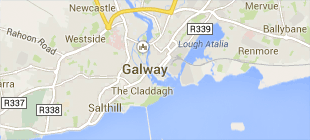
Find Us




© 2025 University of Galway. All Rights Reserved.
University of Galway is a registered charity. RCN 20002107