- My Library Account
- Collections

Collections
The Library provides access to books, electronic resources, archives, special collections, and more to support your learning and research.
- Research

Research
The Library is committed to supporting your research needs with expert guidance and resources.
- Studying

Studying
The Library has all the resources and supports you need to be successful in your studies at undergraduate and postgraduate level. Whether you're just starting your studies or working on your final project, we're here to help.
- Teaching

Teaching
We are here to help lecturers and academic staff deliver quality teaching and support their students' success.
- About

- Workshops & Events
Research Publishing
Research publishing at University of Galway is supported as part of a broader open and digital research culture.
The Library works with the Research and Innovation Office, Colleges and Schools to help you publish in domain-leading outlets (Internal Access), meet funder and policy requirements, and maximise the visibility, accessibility, and long-term preservation of your work.
This page explains what you need to do as an author and points you to key services and guidance you may need, including the University of Galway Research Repository, routes to open publishing, rights retention, national publishing agreements, and one-to-one support from the library.
Key links
Use these links for practical guidance and support:
Steps for authors
Use the steps below as a checklist for research publications covered by the QA237 Research Publishing Policy (applies to all staff and students of the University of Galway. It covers research publications such as journal articles, conference papers, books, book chapters, monographs and reports. Artistic, creative and literary works are recognised as essential research outputs but are excluded from the mandatory elements.)
1. Plan publishing outlet and open route
- Identify suitable journals, conferences or presses that are recognised in your field. Check College or School guidance or publishing strategies (Example of Utrecht University Toolkit for College Publishing Strategies) and the curated lists of domain-leading outlets (Internal Access) managed by the Research and Innovation Committee
- Decide how the output will be made openly available, taking into account funder and policy requirements. See Routes to Open Publishing for repository-led (Green), APC-free (Diamond), and immediate publisher-hosted open access options
- Check for eligibility under national read-and-publish and other open publishing agreements. The National Deals for APCs page sets out current agreements and conditions, including the need to assert University of Galway affiliation.
If you are unsure about a journal, publisher, or press, consult Library guidance on responsible journal selection and predatory publishing or ask for individual advice from experts in publishing in the Library.
2. Before you submit
- Use 'University of Galway' as your primary affiliation on the manuscript and in your ORCID record, where relevant.
- Make sure you will have the correct Author Accepted Manuscript (AAM) file, required metadata (authors, funder, grant, DOI), and permissions for any third-party content so you can deposit in the local Research Repository without delay on acceptance or publication.
- Under the University of Galway Research Publishing Policy, you retain copyright and license content to the publisher. The Library has already notified publishers that eligible AAMs can be made open in the University of Galway Research Repository under CC BY on acceptance. You can add a rights retention statement to your cover letter if you wish, but you do not need to negotiate it with the publisher. Email openanddigitalresearch@universityofgalway.ie with any questions or issues from publishers.
- Suggested text: "For the purpose of open availability, the author has applied a public copyright licence to the Author Accepted Manuscript arising from this submission to enable immediate repository dissemination."
- If you anticipate legal, ethical, security or commercial sensitivities that might require postponing immediate open access, contact the Library and your Research Office representative before submission so that a possible exception can be discussed with the Embargoes sub-committee.
3. When your publication is accepted
- Prepare the version you are allowed to share. Preferably, the Version of Record (publisher PDF), where permitted, otherwise the Author Accepted Manuscript.
- Deposit this version in the University of Galway Research Repository using the “How to submit” instructions and include accurate metadata, including funder information and grant numbers
- If you need help with the deposit process, contact the repository support service in the Library.
Note: In 2026, a new workflow will be introduced that allows you to submit open publications via the Current Research Information System (CRIS), with eligible publications automatically pushed to the Research Repository. We will update these web pages with up-to-date instructions as these workflows go live.
4. After deposit
The Library will:
- Verify that an appropriate version has been deposited and check metadata
- Check any exception requests, copyright and licence information
- Make the deposited version openly available under the policy and any approved embargo
- Register DOIs for items where appropriate and ensure metadata are harvested by national and international discovery services.
You do not need to repeat these steps on other repository platforms unless required by a specific funder or collaborator.
Advice and one-to-one support
Contact the Open and Digital Research team for individual questions on:
- Rights retention and publisher agreements
- Repository deposit and versioning
- Using read-and-publish agreements (National APC deals)
- Assessing journal or publisher quality
- For general open publishing guidance, repository support, rights retention queries, and publishing agreement questions, you can also use the research contact page.
.jpg)
Dr Jen Smith
Open Research Librarian
Email: jen.smith universityofgalway.ie
Open Practice, Research Publishing, and Rights Retention
.jpg)
Trish Finnan
Digital Publishing and Data Management Librarian
Email: trish.finnanuniversityofgalway.ie
091 49 5961
Data Management Plans (DMPs), Research Data Management (RDM), Open Publishing, Open Educational Resources (OER)
Frequently Asked Questions
Not paying vs paying: What do I do
Paying an Article Processing Charge (APC) can buy immediate publisher-hosted open access. It is not the only compliant route. Research Repository/CRIS deposit (Green) and APC-free venues (Diamond) often meet policy needs without author payment.
If you do not pay
- Publish and deposit AAM (or permitted version) in the Research Repository/CRIS (Green)
- Use Diamond OA where a suitable venue exists in your field
- Rely on read-and-publish agreements (National APC deals via IRel) where eligible (APC covered centrally)
- Watch embargoes and rights, and find out more about rights-retention.
If you pay (APC or similar)
- Immediate open access on the publisher site (e.g. Gold or Hybrid)
- Licence terms may be standardised (often Creative Commons, depends on journal)
- Central payment eligibility may depend on the APC quota, publisher agreements, and affiliation check
- Still deposit in Research Repository (Green).
How to choose where and how to publish
The policy expects authors to exercise due diligence and avoid outlets that engage in deceptive or poor practices. Outputs in questionable outlets may be ineligible for internal support or excellence-focused initiatives. For support with selecting an appropriate publication outlet:
- Start with the Routes to Open Publishing guide for an overview of repository-led, Diamond, and publisher-hosted open access options.
- Use the Submit publication to Research Repository guidance and the University of Galway Research Repository page for deposit instructions and repository information.
- Check the National Deals for APCs page for information on publisher agreements, quotas, eligibility and how to take advantage of read-and-publish deals.
- Consult the Guides for information on quality indicators, predatory publishing and tools such as DOAJ, Think. Check. Submit., and major indexing services.
- If you plan to publish a book, chapter, or other long-form output, you can also discuss options with OpenPress at University of Galway.
Do co-authors at other universities have to follow the University of Galway Research Publishing Policy?
No. This policy applies to all staff and students of the University of Galway. Where a publication includes a University of Galway author, that author should comply with the requirements of this policy. Co-authors at other institutions are not subject to this policy as an institutional requirement, but should be made aware where a University of Galway author intends to make the Author Accepted Manuscript or Version of Record openly available through the University of Galway Research Repository in accordance with the University of Galway Research Publishing policy.
If the lead or corresponding author is at another university, does a University of Galway co-author still need to follow the policy?
Yes. This policy applies to University of Galway staff and students, including where they are a co-author rather than the lead or corresponding author. A University of Galway co-author should therefore comply with the requirements of this policy, including deposit of the Author Accepted Manuscript or Version of Record on acceptance for publication in the University of Galway Research Repository. This should be raised with co-authors at an early stage so that the publication can proceed in a way that enables compliance with the policy.
How to meet policy and funder requirements
The Research Publishing Policy sets out University-level expectations for the open availability of research publications, alignment with external policies, and the use of institutional infrastructure, such as the Research Repository and CRIS. As an author, you should:
- Ensure that each publication carries a clear statement on how others can access underlying research data, software or materials, where appropriate
- Use 'University of Galway' as the primary affiliation for outputs arising from University employment or student research, including in persistent identifiers such as ORCID
- Follow funder-specific open publishing rules and licence requirements. The Open Publishing Guide explains the major funder policies and how they interact with University supports.
What if there are substantial grounds for postponement of immediate open availability?
If you believe there are substantial grounds for postponement of immediate open availability, you should document the reason at the time of submission to the Research Repository/CRIS. Approved exceptions may apply where there are legal restrictions, ethical concerns, issues of national security, commercial sensitivity, or other overriding public interest reasons. The approved exceptions are described on the Research Publishing Policy page. The Author Accepted Manuscript or Version of Record must still be deposited on acceptance in the University of Galway Research Repository, and the metadata will be made publicly available immediately, even where open availability of the full text is postponed. Any postponement of open availability must be requested at the time of submission, will be considered by the Embargoes working group, and should be for the shortest period necessary. The detailed process for this is currently in development (expected Q3 2026).
Library
The Library proactively supports and enhances the learning, teaching, and research activities of the University. The Library acts as a catalyst for your success as University of Galway’s hub for scholarly information discovery, sharing, and publication.

Contact
Library,
University of Galway,
University Road,
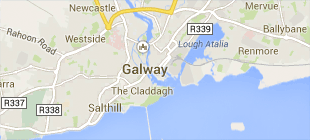
Galway, Ireland
T. +353 91 493399
Find Us




© 2025 University of Galway. All Rights Reserved.
University of Galway is a registered charity. RCN 20002107