- My Library Account
- Collections

Collections
The Library provides access to books, electronic resources, archives, special collections, and more to support your learning and research.
- Research

Research
The Library is committed to supporting your research needs with expert guidance and resources.
- Studying
Studying
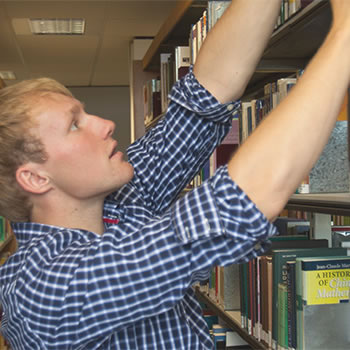
The Library has all the resources and supports you need to be successful in your studies at undergraduate and postgraduate level. Whether you're just starting your studies or working on your final project, we're here to help.
- Teaching

Teaching
We are here to help lecturers and academic staff deliver quality teaching and support their students' success.
- About
- Workshops & Events
Politics
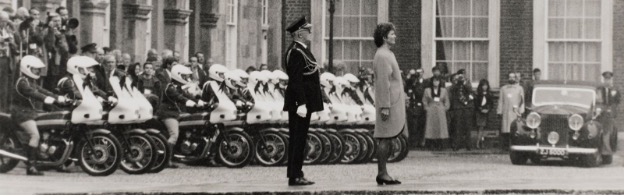
Politics and Human Rights
University of Galway Library includes a wide range of archives relating to the promotion and defence of human rights on the Island of Ireland as well as internationally. A number of political archives spanning the twentieth century and with a particular focus on peace and conflict in Northern Ireland, from the emergence of the Civil rights Movement through to the journey towards peace in the 1990s and the Belfast Good Friday Agreement of 1998, offer a unique insight into the global experience of advocacy for human rights, as well as the often hidden lives of peacemakers, paramilitary organisations, and of the political decisions which shape countries and communities all around the world.
Mary Robinson | Brendan Duddy | Hugh Logue | Kevin Boyle | Ruairí Ó Brádaigh | Paddy McMenamin
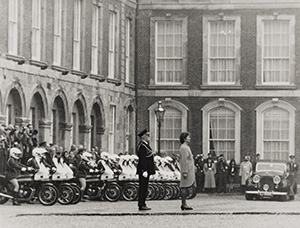
Mary Robinson
At almost 700 archive boxes, the Mary Robinson archive consists of material relating to her six-decade long career including her time as a barrister, President of Ireland, United Nations (UN) High Commissioner for Human Rights, UN Special Envoy for Climate Change and for El Niño, Chair of the Elders, founder of Realizing Rights - The Ethical Globalization Initiative, and founder of the Mary Robinson Foundation - Climate Justice.
Human Rights has been a consistent theme of Robinson’s work throughout her career, from her time as a law student to the present day. The archive reflects her significant contribution to Ireland and the world and offers a unique insight into a lifetime of dedicated public service. She has made real change through legal work, policy and advocacy, nationally and internationally, for decades and remains a prominent voice speaking truth to power.
 |
|---|
Suggested links:
- Archive catalogue listing
- Overview of archive
- Blog of 1st tranche release (Legal and Presidential Series)
Conradh na Gaeilge was founded in 1893 to promote Irish language and culture in Ireland and abroad and became the main organisation to spearhead the Irish language revival.
Staff were and continue to be actively involved in promoting and observing the use of Irish across all aspects of everyday activities and the material covers a whole range of topics as a result.
A significant portion of archive material covers several language rights campaigns. In the latter half of the 20th century Conradh, along with other organisations, was instrumental in community campaigns which led to the creation of Irish language radio and television stations, to the enactment of the Official Languages Act [14 July 2003] in the South, and to making Irish an official language of the European Union [1 January 2007]. Campaign material in the collection also includes documents relating to prisoners’ rights and civil rights in Northern Ireland, in particular during the period of the Hunger Strikes [1980-1981] .
At the core of all of these campaigns is the right of the individual to their own name, and to living and interacting in their own language, one that is indigenous to this island.
Suggested links:
Brendan Duddy
Brendan Duddy was a businessman from Derry who became a peacemaker and mediator during some of the most intense and also darkest periods of Northern Ireland’s history during The Troubles. Throughout twenty years of violent conflict in Northern Ireland a secret channel of communication linked the IRA to the highest levels of the British government. At the heart of this channel was a single intermediary, Brendan Duddy. His house was the venue for secret negotiations between the British Government and the IRA throughout 1975. He managed the intense negotiations over the Republican hunger strikes in the H-Blocks at HM Prison Maze near Belfast in which ten Republican prisoners died (1980-1981) and he was at the heart of the contacts (1991-1993) that culminated in a secret offer of a ceasefire that was a precursor to the public IRA ceasefire of 1994.
From secret codenamed communications, a series of diaries, to files of other documents, the Duddy archive documents a life committed to making peace in Northern Ireland.
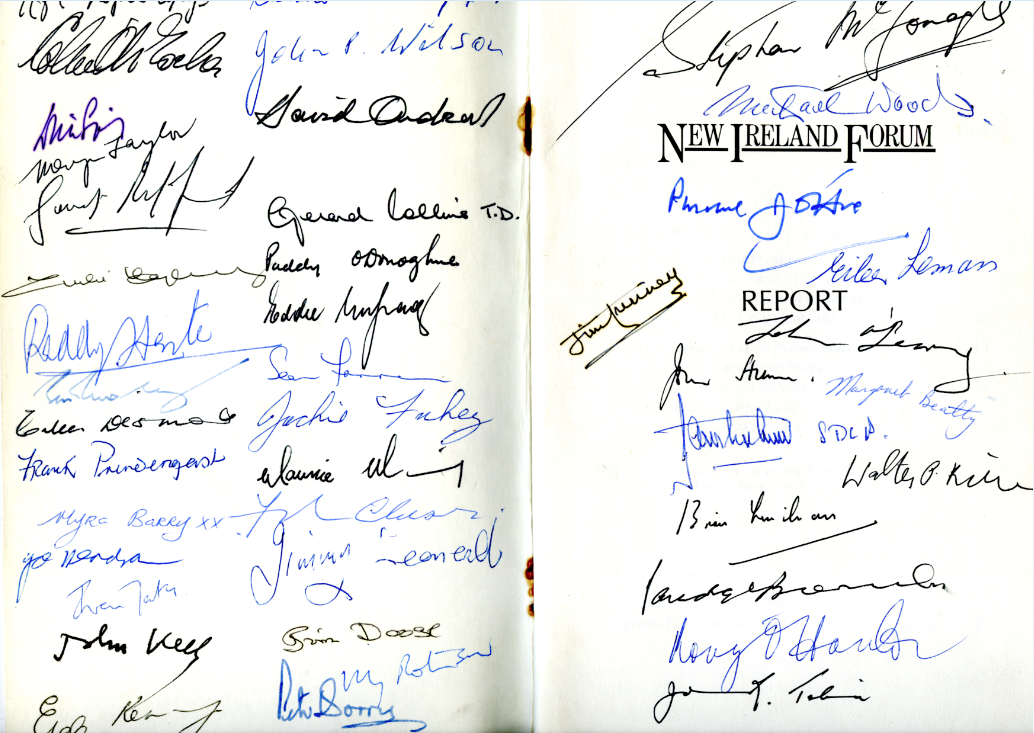
Hugh Logue
Hugh Logue is a former civil rights activist, a founding member of the SDLP, politician and economist. The archive documents Logue’s life and career, from his entry into Northern Irish politics in the early 1970s, through to a distinguished career in the European Commission, and more latterly as a Chief Special Advisor and speech writer at the Office of First Minister and Deputy First Minister at Stormont, where he worked closely with Séamus Mallon during the establishment of the Executive in the years following the Good Friday Agreement, from 1998-2003.
The Logue archive contains early political and election material from his successful election to Westminster in 1973, SDLP policy papers in the 1980s and 1990s, papers from his work with the Irish Commission for Justice and Peace which offer new insights into its work to resolve the 1981 hunger strikes. The archive also includes key papers from Logue’s early work with the European Commission in the 1990s, including the Delors taskforce and the E.U. Peace and Reconciliation Fund, both PEACE packages and European Science and Technology for regional development. Also included are multiple manuscript and annotated drafts of Logue's testimony to the Saville Tribunal and his actions and memories of civil rights marches and events in Northern Ireland, leading up to and including Bloody Sunday. The Logue archive presents an important new collection that will enable new studies and understandings of the political, social and economic development of Northern Ireland, as well as important links with Europe.
Kevin Boyle
Kevin Boyle was born in Newry, Co. Down in 1943, graduating from Queen’s University Belfast in 1965 1965 and Cambridge University in 1966. Committed to Civil Rights and peaceful resolution Boyle worked as Public Relations Officer of the Northern Ireland Civil Rights Association and was also a member of the group People's Democracy, along with others such as Bernadette Devlin, Eamon McCann and Michael Farrell. Boyle was one of the marchers on the Civil Rights March from Belfast to Derry on 1 January 1969.
Boyle became Professor of Law at University College Galway in 1978 and was central to developing the faculty and the later development of the Irish Centre for Human Rights. As well as academic and legal work on Northern Ireland Boyle was involved with Amnesty International, Ireland, in the 1980s, reporting from trips to the Gambia, Somalia, and South Africa. A move to London would come in 1986 where Boyle would become the founding director of the international NGO 'Article 19' - a body concerned with international defence of freedom of expression, press and media standards, anti-censorship, freedom of religious belief and related causes. Boyle would also serve as Chairman of the International Committee for the Defence of Salman Rushdie.
Boyle would return full-time to academia in 1990 took up the position of Director of the Human Rights at University of Essex, Colchester, where he would act as Director of the Centre for Human Rights until 2001 and again from 2002 - 2006. While at Essex, Boyle worked tirelessly as academic and international advocate for a huge range of areas and disciplines of human rights. Boyle would also continue his legal work and contribute to major cases. In 1998, Boyle was jointly awarded, along with his colleague in Essex, Professor Françoise Hampson, as United Kingdom Human Rights Lawyer of the year. Boyle served as Special Advisor and speechwriter to Mary Robinson, in her capacity as United Nations High Commissioner for Human Rights in 2001.
 |
|---|
The Boyle archive represents a wealth of material and unique insights into the field of human rights and law research and scholarship. Its breadth of subject matter, from the Civil Rights Movement in Northern Ireland, later conflict throughout 'the Troubles', international freedom of expression and freedom of religious belief defence, legal analysis and representation, academia and teaching as well as vast amounts of personal correspondence allow for new insights and understandings of Boyle's contributions to the discipline of human rights internationally.
Ruairí Ó Brádaigh
The Ruairí Ó Brádaigh papers relate primarily to his involvement in the Republican Movement. The collection contains items relating to 'The Border Campaign' and the 1975 cease-fire. Other material relates to Ó Brádaigh's time as President of Provisional Sinn Fein and some items including letters to newspapers which look back on earlier events such as the meeting between leading Republicans and Protestant clergy men in Feakle, Co. Clare. The material relating to the 1975 cease fire and talks on a bi-lateral truce between the Republican Movement and the British Government consists primarily of notes taken by Ó Brádaigh at the time of the talks. These notes relate to face-to-face meetings between the representatives of the Republican Movement and representatives of the British Government and also contacts between the two parties carried out through an intermediary.
Paddy McMenamin
Paddy McMenamin Archive - Born in Belfast, Paddy McMenamin was a witness to much of the turmoil in the city since the outbreak of the Troubles. As a teenager, McMenamin joined the Provisional IRA (PIRA) and was arrested on New Year’s Eve, 1971, for being a member of a paramilitary organisation, spending more than five months in jail. He was released as part of the ceasefire between the IRA and the British in May 1972. Following the collapse of this ceasefire, McMenamin returned to active service with the PIRA, and was later arrested once more and imprisoned within Long Kesh. His archive includes issues of the prison journals which McMenamin edited within Long Kesh as Hut PRO. A photograph album also documents prisoner life within Long Kesh of the mid-1970s. The prison journals have been digitised and are accessibile via the Paddy McMenamin Digital Collection on our Digital Collections repository.
Library
The Library proactively supports and enhances the learning, teaching, and research activities of the University. The Library acts as a catalyst for your success as University of Galway’s hub for scholarly information discovery, sharing, and publication.

Contact
Library,
University of Galway,
University Road,
Galway, Ireland
T. +353 91 493399
Find Us




© 2025 University of Galway. All Rights Reserved.
University of Galway is a registered charity. RCN 20002107