- My Library Account
- Collections
Collections
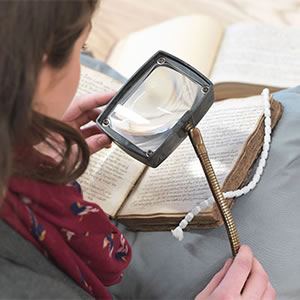
The Library provides access to books, electronic resources, archives, special collections, and more to support your learning and research.
- Research

Research
The Library is committed to supporting your research needs with expert guidance and resources.
- Studying
Studying
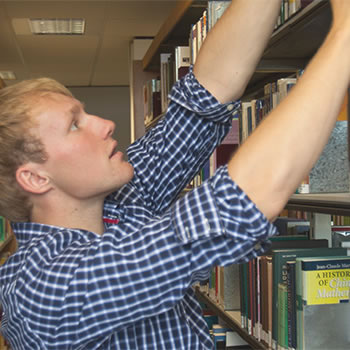
The Library has all the resources and supports you need to be successful in your studies at undergraduate and postgraduate level. Whether you're just starting your studies or working on your final project, we're here to help.
- Teaching

Teaching
We are here to help lecturers and academic staff deliver quality teaching and support their students' success.
- About
- Workshops & Events
Blogs
About Us
Welcome to the blog of the Archives and Special Collections of University of Galway Library.
The Archives and Special Collections preserve and make accessible a range of materials which date from the 15th century to the present day. Collections are accessible on-site at the Archives and Special Collections Reading Room, located at the Hardiman Building, and also online through our Digitial Collections online repository.
As well as providing a service to students and staff of the University, Archives and Special Collections strengthen links between the University and the wider community through hosting and partnering in events such as exhibitions and public talks. By acquiring and preserving rare printed and archive material, the service supports scholarship, research, and discovery of our local, national, and international heritage and history.
This blog will give regular updates on the collections, new acquisitions, items of interest, newly digitised materials, as well as updates on access and upcoming special events.
Wed, 29 Jul 2026 09:57:00 +0000
Mayo before Gold and the Kerry of Old!
Baseline reports of the Congested Districts Board of Ireland 1892.
In 1891 the Congested Districts Board of Ireland was established to deal with the extreme destitution which existed in certain regions throughout the West of Ireland. The board was founded by Mr. Arthur James Balfour, and included members of the Anglo-Irish gentry, philanthropists and prominent Irish businessmen. A year later, inspectors employed by the board began compiling baseline reports which collected valuable data pertaining to the conditions of these areas. Their goal was to offer sustainable, long-term solutions for the advancement of agriculture and amenities within these districts, thus improving the overall quality of life.
These reports were generously donated from a private collection and subsequently digitized by the University of Galway Archives in 2025. This material offers valuable insight into the economic landscape of the West of Ireland in the late 19th century. Its research potential spans many disciplines from Social Sciences to Humanities and more!

Inside the reports:

Picture taken from The Congested Districts Board of Ireland, 1891-1923: poverty and development in the west by Ciara Breathnach (2005)
Inside the reports:
One of my favorite images from these reports is an incredibly evocative description of rural poverty which existed in South Connemara in 1892.
Inspector W.P Gaskell writes: “I have seen a half-naked child of four to five year laying asleep before the turf fire, with his head on a rough block of wool, while the cow stood over him, as if watching and guarding the child.”
The practice of animals and people cohabiting was very common throughout the West of Ireland especially in Galway and Mayo. In the district of Kiltimagh, Inspector Henry Dolan expresses his wonder at the civility of these Mayo people in spite of being, “born and reared in the same room as their cattle [....] living in such foul surroundings, in such close association with the brutes of the field.”
Despite Mayo's glorious triumph over the weekend, the inhabitants of this county have not always been described in such favorable terms. Henry Doran describes the people of Ballyhaunis, home of Mayo captain Jack Coyne, as a “thriftless, indolent lot.”
Similar sentiments can be said for their Kerry rivals, where in Dingle, home of Kerry’s captain Paul Geaney, Inspector J.E Butler remarks that the people are “much too given to holidays.”
The opinions of these district inspectors regarding the character and culture of the Irish peasantry are a fascinating aspect of this valuable resource. One such noteworthy comment is from Inspector Frederick George Townsend Gahan, who is surprised that the people of Tory Island do not suffer any health issues or defects despite the continuous "intermarrying of persons related.” He remarks that there is not a single person on Tory Island who is not related, and he speculates that because the islanders eat such a large quantity of fish, the “phosphorous” in their blood keeps them healthy.
These reports offer a treasure trove of data regarding land valuations and economic studies, however, they also illustrate the pivotal role women played in rural areas throughout 19th century Ireland. The practice of members from congested districts migrating for part of the year to the more lucrative lands of England or Scotland was widespread. As such, women were tasked with keeping the land and house afloat, and in several districts the inspectors praise women for their unwavering work ethic.
A palpable example of this can be found in Glenties Co. Donegal, where Inspector F.G Townsend Gahan writes; "The women are constant workers and are the sole support almost of all the families in the district. They all knit [....] they knit in the field, knit in the houses, knit as they walk along the roads- in fact, unless their hands are otherwise employed, they are always knitting.”
The above is just a small snippet of the notable phrases and indispensable information which exists within this collection. The various facets of life described within these reports mean they have an innate versatility which will capture the attention of researchers and readers alike. The information within them paints such a vivid picture of the Ireland of old, that they will undoubtedly transport you back to the 19th century.
To explore more reports visit https://digital.library.universityofgalway.ie
Despite Mayo's glorious triumph over the weekend, the inhabitants of this county have not always been described in such favorable terms. Henry Doran describes the people of Ballyhaunis, home of Mayo captain Jack Coyne, as a “thriftless, indolent lot.”
Similar sentiments can be said for their Kerry rivals, where in Dingle, home of Kerry’s captain Paul Geaney, Inspector J.E Butler remarks that the people are “much too given to holidays.”
The opinions of these district inspectors regarding the character and culture of the Irish peasantry are a fascinating aspect of this valuable resource. One such noteworthy comment is from Inspector Frederick George Townsend Gahan, who is surprised that the people of Tory Island do not suffer any health issues or defects despite the continuous "intermarrying of persons related.” He remarks that there is not a single person on Tory Island who is not related, and he speculates that because the islanders eat such a large quantity of fish, the “phosphorous” in their blood keeps them healthy.
 |
Picture taken from The Congested Districts Board of Ireland, 1891-1923: poverty and development in the west by Ciara Breathnach (2005)
These reports offer a treasure trove of data regarding land valuations and economic studies, however, they also illustrate the pivotal role women played in rural areas throughout 19th century Ireland. The practice of members from congested districts migrating for part of the year to the more lucrative lands of England or Scotland was widespread. As such, women were tasked with keeping the land and house afloat, and in several districts the inspectors praise women for their unwavering work ethic.
A palpable example of this can be found in Glenties Co. Donegal, where Inspector F.G Townsend Gahan writes; "The women are constant workers and are the sole support almost of all the families in the district. They all knit [....] they knit in the field, knit in the houses, knit as they walk along the roads- in fact, unless their hands are otherwise employed, they are always knitting.”
The above is just a small snippet of the notable phrases and indispensable information which exists within this collection. The various facets of life described within these reports mean they have an innate versatility which will capture the attention of researchers and readers alike. The information within them paints such a vivid picture of the Ireland of old, that they will undoubtedly transport you back to the 19th century.
To explore more reports visit https://digital.library.universityofgalway.ie
Fri, 17 Jul 2026 07:57:35 +0000
Event marking the accession of the M J Kilgannon Collection to the Library
On Wednesday 8th July we had the pleasure of
welcoming the family of M J Kilgannon to the Deirdre and Irial Finan Archives
and Special Collections Reading Room to mark the accession of papers relating
to his life and work. Monica Crump, University Librarian, welcomed the wife, children and grandchildren of ‘the
man who stopped the train’ in Woodlawn who came from Ireland, England and New
Zealand for the event. Monica highlighted the use of the collection for many
areas of research for our students in the years ahead and thanked the family
for their donation of papers to the Library.

MJ Kilgannon was a Fine Gael county councillor in the
1970s-1980s for the Ballinasloe area. He was a strong community activist,
heavily involved in group water schemes, community development and the heritage
of Woodlawn and its vicinity. He was school principal at Ballymacward National
School for many years. He also campaigned for mental health supports at a time
when there was not much there. He is perhaps best known as the man who stopped
the train at Woodlawn in 1977, campaigning to keep Woodlawn station open at a
time when it was threatened with closure. He would also have campaigned to keep
post offices open in later years.

The collection fits in with a number of research themes
across our collections. One of MJ's uncles, Tommy, died in the Titanic, so that
ties in a lot with the transatlantic journey recorded by many people in the
Imirce material. Another uncle, John Nutley, a member of the RIC, was killed
outside Bansha Church in May 1921 during the War of Independence, this ties in
with a good number of the political collections. The history of the Woodlawn
area comes across in his papers very much, so people like Lord Ashdown and his
opposition to the Land Acts tie in with a lot of our Landed Estates material.
The intersection of community activism, local politics and rural development is
a theme researched a lot in Soc & Pol, Geography and History, and his views
on the changes in national education from the 1960s to the 2010s are very
interesting also from the research point of view. The connection with Muintir
na Tire is very interesting, and how community councils took over the role of
Parish Guilds, including group water schemes, community councils themselves and
community alert. By keeping the Woodlawn train station open, for example, that
became an important piece of infrastructure in the locality that has keep young
families coming into the area, ties in with engineering and transport studies
for Galway and its hinterland in our holdings.

Anyone wishing to access the collection can get in touch
with us in Heritage Collections.

Tue, 30 Jun 2026 15:47:47 +0000
Botanical Books
As June draws to a close, flowers and plants are alive with colour. This month's Explore Your Archive theme, #EYAColourful, offers an opportunity to showcase some vibrant botanical books from our collections. Spanning the seventeenth to nineteenth centuries, these three books explore plant life through the lenses of art, science and gardening.
Wild Flowers and Plants of Rathlin Island

Off the north coast of Antrim lies the peaceful and rugged island of Rathlin. In 1746, Reverend John Gage bought the island from the fifth Earl of Antrim for £1750, and successive members of the Gage family developed the island from there. In the early nineteenth century, Catherine and Barbara Gage lived on the island and developed a keen interest in its plants and natural history. From 1840-1850, the sisters painted the wildflowers and garden flowers that surrounded them, and their albums were acquired by Belfast’s Linen Hall Library in 1998.
To mark Linen Hall Library’s 225th anniversary in 2013, eight of the Gage paintings were released in this limited-edition publication, Wild Flowers and Plants of Rathlin Island. Catherine and Barbara Gage’s paintings are a beautiful record of the island’s nineteenth-century flora.

Erucarum ortus, alimentum et paradoxa metamorphosis

Maria Sibylla Merian’s ‘Caterpillar books’ combine art with scientific observation. Born in Frankfurt in 1647, Merian had an interest in insects from a young age. She spent over fifty years rearing caterpillars and recording their transformation into butterflies and moths. Trained by her artist stepfather, she also became an excellent painter and she used her artistic skill to document the natural world.
Her research was published in three volumes of the Raupenbuch (Caterpillar Book), originally written in Dutch between 1679 and 1717. Hoping to reach a wider international audience of scientists, Merian began translating her books into Latin, the universal language of science at the time. After her death in 1717, her daughter Dorothea finished the translations and oversaw the publication of the first Latin edition, Erucarum ortus, alimentum et paradoxa metamorphosis. Merian’s research into the relationship between plants and insects was a foundational contribution to the development of modern entomology, the study of insects.

This edition is printed in counterproof, a process that takes impressions from freshly printed images instead of engraved plates. This method preserves the original orientation of the artwork as well as the intricate details and vibrant colours.
Familiar Garden Flowers
Described as the Father of Amateur Gardening, James Shirley Hibberd (1825-1890) transformed gardening literature in Victorian England.

After working as a bookbinder, bookseller, writer and journalist, he eventually turned his attention to horticulture. At the time, gardening publications were written for wealthy estate owners who hired professionals to maintain their gardens. Instead, Hibberd wrote as an amateur gardener for amateur gardeners. His advice came from his own experience experimenting with different methods for growing flowers, fruits and vegetables. He made gardening more accessible for ordinary people by recommending plants suitable for smaller gardens and more resilient to smoky urban air.
Familiar Garden Flowers is the second volume of a multi-volume series published between 1879 and 1897 with text by Hibberd and illustrations by F. Edward Hulme.


Library
The Library proactively supports and enhances the learning, teaching, and research activities of the University. The Library acts as a catalyst for your success as University of Galway’s hub for scholarly information discovery, sharing, and publication.

Contact
Library,
University of Galway,
University Road,
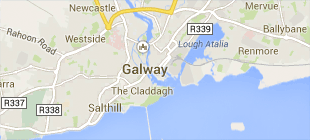
Galway, Ireland
T. +353 91 493399
Find Us




© 2025 University of Galway. All Rights Reserved.
University of Galway is a registered charity. RCN 20002107